In 2025, Sony makes a powerful entry into the market with its first 200-megapixel mobile CMOS sensor—the LYTIA 901—going head-to-head with Samsung, which has already established a significant lead in this sector. Samsung has firmly secured its market position through a diverse lineup of 200-megapixel sensors, including the ISOCELL HP2, HP5, and HP9.
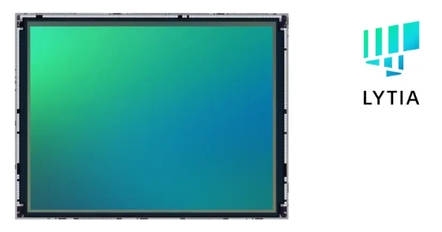
Sensor size and pixel architecture are fundamental factors that determine imaging quality. First, the Sony LYTIA 901 features a 1/1.12-inch optical format with a diagonal length of 14.287mm, making it a veritable “colossus” within the 200-megapixel sensor landscape. A standout feature is its 0.7μm pixel size, paired with a Quad-Quad Bayer Coding (QQBC) filter array. This unique arrangement significantly enhances light-gathering capabilities—and consequently, dynamic range—by clustering 16 adjacent pixels of the same color. With this move, Sony aims to achieve flagship-tier imaging performance using a single primary sensor, thereby reducing the reliance on additional telephoto modules; this approach not only frees up valuable internal space within the smartphone but also simplifies the overall camera hardware architecture.
In contrast, Samsung’s 200-megapixel sensors exhibit a wide variety of size specifications. The ISOCELL HP2, featured in the Samsung S25 Ultra, utilizes a 1/1.3-inch format with 0.6μm pixels; the HP5, found in the vivo Y500 Pro, measures 1/1.56 inches with pixels of just 0.5μm; meanwhile, the HP9—optimized specifically for telephoto applications and featured in models such as the vivo X100 Ultra and Xiaomi 15 Ultra—adopts a 1/1.4-inch format with 0.56μm pixels. Samsung’s strategic approach prioritizes meeting the diverse requirements of different smartphone models and design aesthetics, emphasizing sensor compactness and modularity. This strategy facilitates smartphone manufacturers in creating thinner and lighter devices, while also enabling the construction of sophisticated hybrid zoom systems.

From this perspective, the Sony LYTIA 901—by virtue of its larger sensor size—possesses an inherent advantage in light intake. Theoretically, this should translate into superior imaging performance in low-light environments, with the potential for significant improvements in both image detail and noise control. However, Samsung’s diverse range of sensor sizes allows it to better accommodate mobile phones of varying market positioning and design aesthetics, thereby offering greater flexibility in terms of market coverage.
HDR (High Dynamic Range) and color reproduction capabilities are key metrics for evaluating the image quality of mobile phones. Sony’s LYTIA 901 places a strong emphasis on HDR processing, integrating multi-layer HDR technologies—including support for DCG-HDR and Fine 12-bit ADC—to effectively enhance tonal depth and dynamic range; this ensures outstanding performance even when utilizing 4x zoom. Furthermore, its Hybrid Frame HDR (HF-HDR) technology fuses short-exposure and high-gain data to achieve a dynamic range exceeding 100 dB in stacking mode, effortlessly handling scenes characterized by stark contrasts between highlights and shadows—such as backlit shots or nightscapes featuring artificial lighting.
